Acrylic on unstretched linen canvas
101 x 165.1 cm (40 x 65 in)
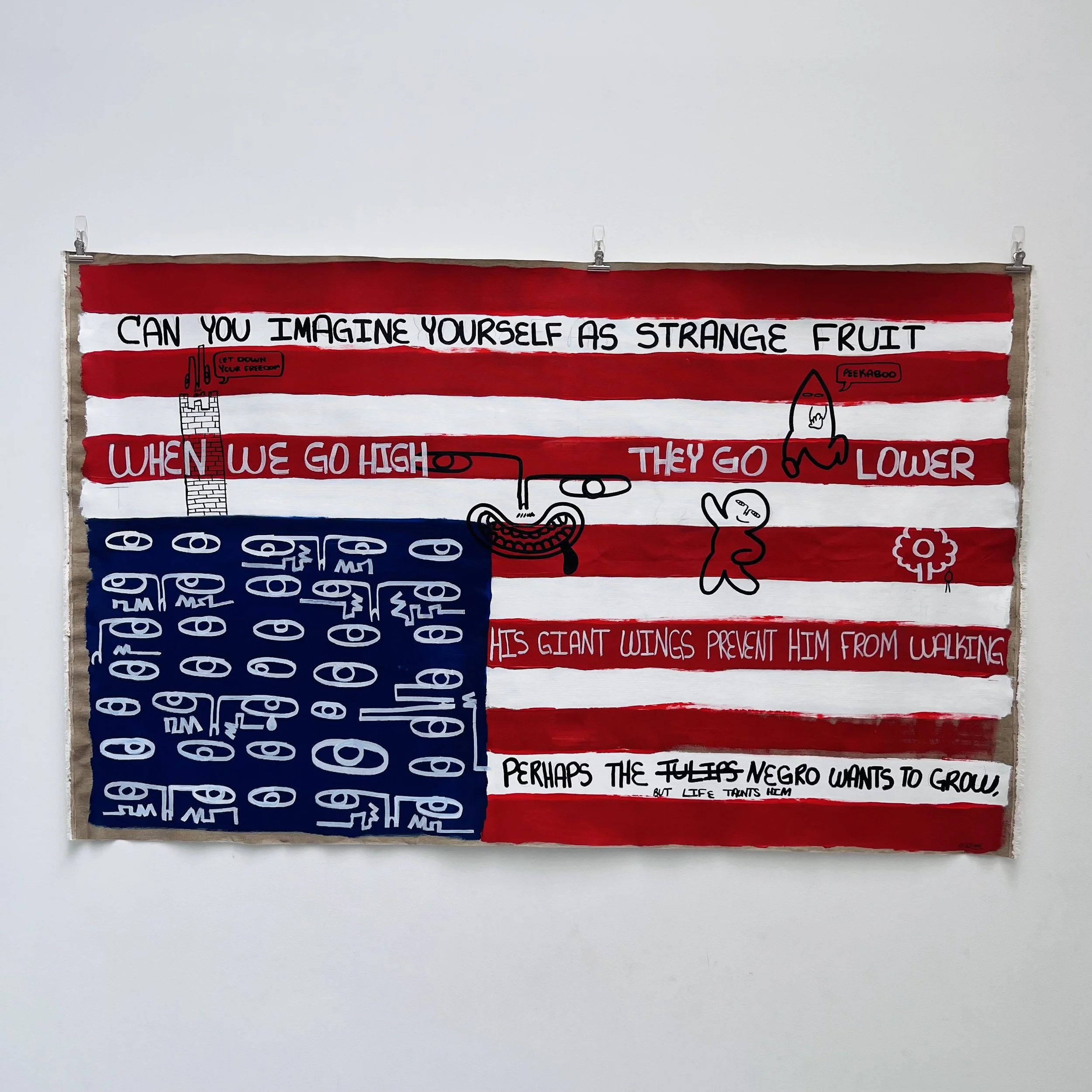
A Letter to America explores the upside down democracy of America—specifically in the consistent threat of oppression over freedom for Black Americans. The flag debuted in LOCKOLAND: Vienna, where I was told I could be arrested for displaying works with words like this on it.
Nevertheless, The United States of Locko: A Letter to America is part of LOCKOLAND: Paris, as I believe it is appropriate for Paris’ history as a gathering place for Black artistic expression. On the flag, I write “can you imagine yourself as strange fruit,” to encourage critical thinking across races. “Perhaps the negros want to grow” alludes to W.H. Auden’s “perhaps the tulips want to grow” from his poem If I Could Tell You. I used ‘negro’ instead of ‘tulip’ because, like the tulip, the negro cannot help what they are and where they live—they are in a garden, living day by day. It is here that I am trying to plant the idea in the observer that perhaps the Black American just wants to do exactly what it is that everyone else in America is doing. Maybe, just maybe, he wants to feel normal and not segregated or existing in the face of daily oppression.
Acrylic on unstretched linen canvas
101 x 165.1 cm (40 x 65 in)
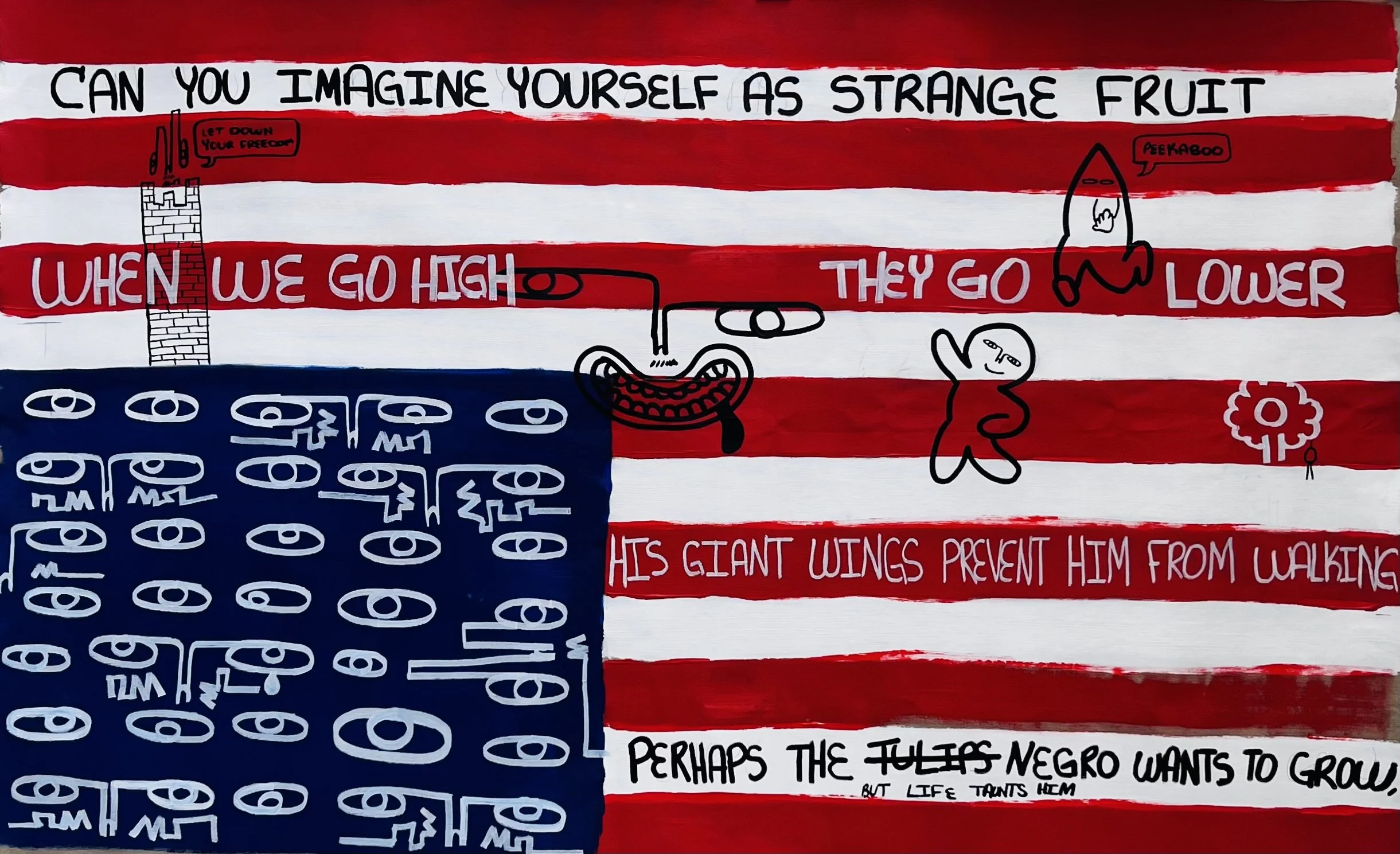
A Letter to America explores the upside down democracy of America—specifically in the consistent threat of oppression over freedom for Black Americans. The flag debuted in LOCKOLAND: Vienna, where I was told I could be arrested for displaying works with words like this on it.
Nevertheless, The United States of Locko: A Letter to America is part of LOCKOLAND: Paris, as I believe it is appropriate for Paris’ history as a gathering place for Black artistic expression. On the flag, I write “can you imagine yourself as strange fruit,” to encourage critical thinking across races. “Perhaps the negros want to grow” alludes to W.H. Auden’s “perhaps the tulips want to grow” from his poem If I Could Tell You. I used ‘negro’ instead of ‘tulip’ because, like the tulip, the negro cannot help what they are and where they live—they are in a garden, living day by day. It is here that I am trying to plant the idea in the observer that perhaps the Black American just wants to do exactly what it is that everyone else in America is doing. Maybe, just maybe, he wants to feel normal and not segregated or existing in the face of daily oppression.