Shop the collection
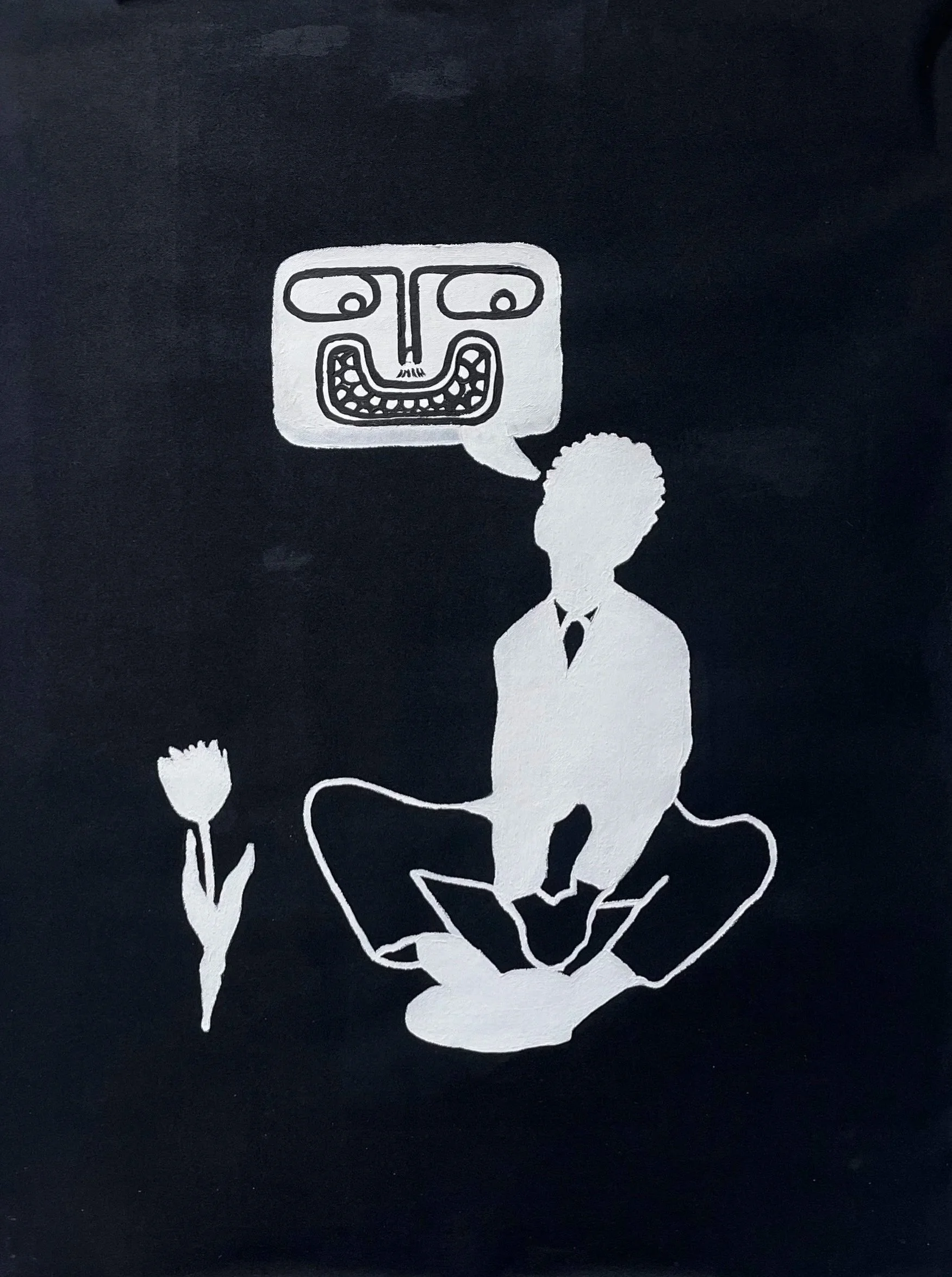
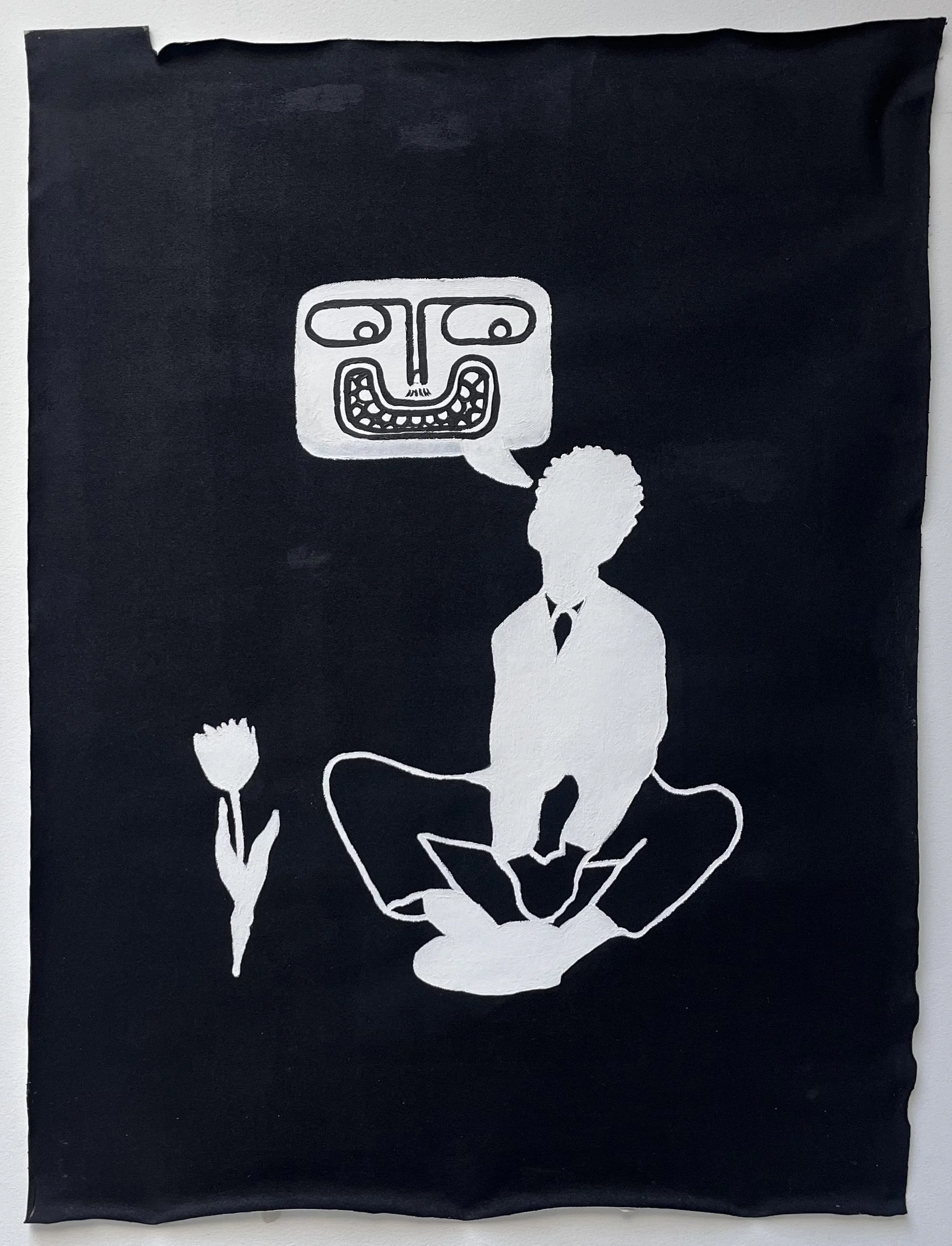
Acrylic on Unstretched Canvas
33.25 x 24.75 in (84.45 x 62.86 cm)
In A Boy’s Dream, a boy representing both the figure and the artist sits beside a tulip, daydreaming. His posture is calm and content, his hands and feet close together while his head tilts upward as though imagining another world. Nearby, the doodle looks directly at him, emphasizing focus and connection. This piece reflects my desire to evolve creatively. For a long time, the Lockadoodle (the doodle with the M-shaped lips) was all I painted. Eventually, I introduced the Lockadook, the doodle with the monstrous mouth and teeth, and more recently, the figure itself. The work is about artistic growth, ambition, and transformation. The tulip symbolizes that growth and mirrors the artist himself. Like nature, the artist continues to evolve, bloom, and expand over time.
Artwork is signed on bottom right corner.
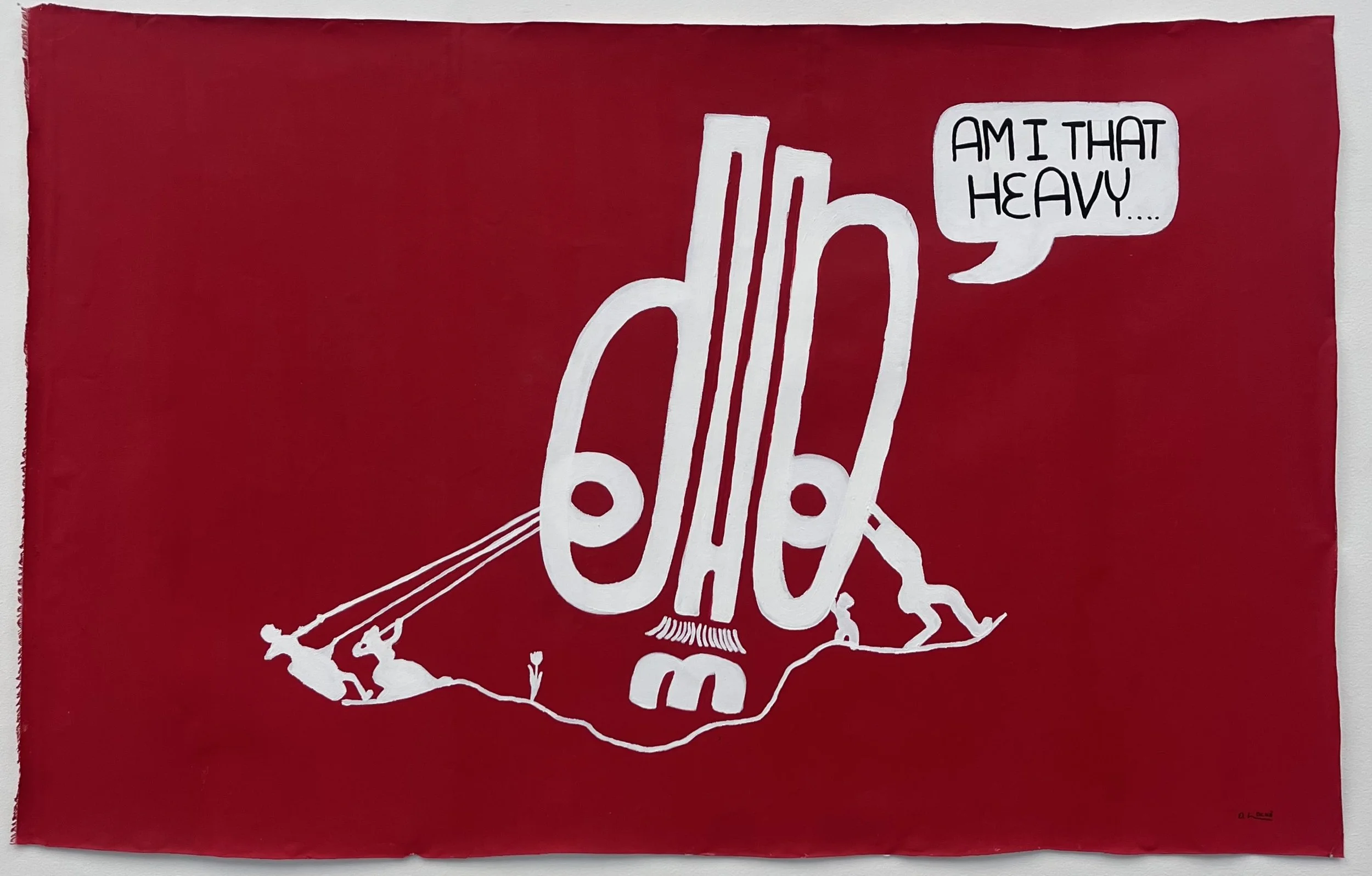
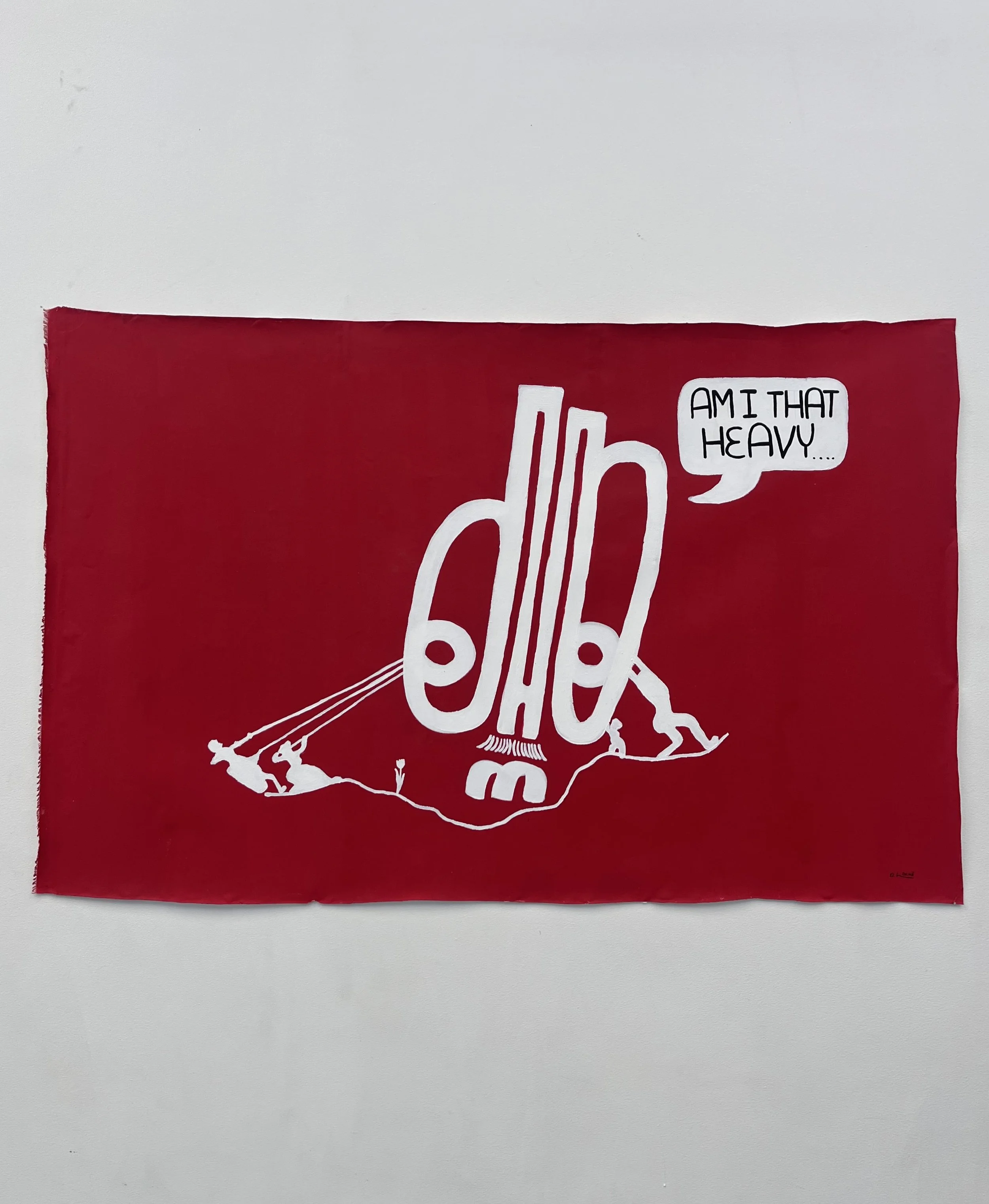
Acrylic on Unstretched Canvas
34.5 x 54.5 in (87.63 x 138.43 cm)
Am I That Heavy is inspired by the work of Kara Walker. In the painting, five smaller figures can be seen either pulling or supporting a giant Lockadoodle. The work reflects the moments when artistic passion begins to fade and the artist questions whether they should continue pursuing their practice. The surrounding figures represent mentorship, endurance, perseverance, and self-support. The giant Lockadoodle cries out, “AM I THAT HEAVY?”, unaware of the emotional and creative weight that passion can carry. Without the help of others (mentors, patrons, and loved ones) the doodle cannot hold itself up. The tulip within the piece symbolizes growth and nature. It serves as an analogy for the Lockadoodle itself: like a flower, artistic passion must be nurtured in order to continue growing.
Artwork is signed on bottom right corner.
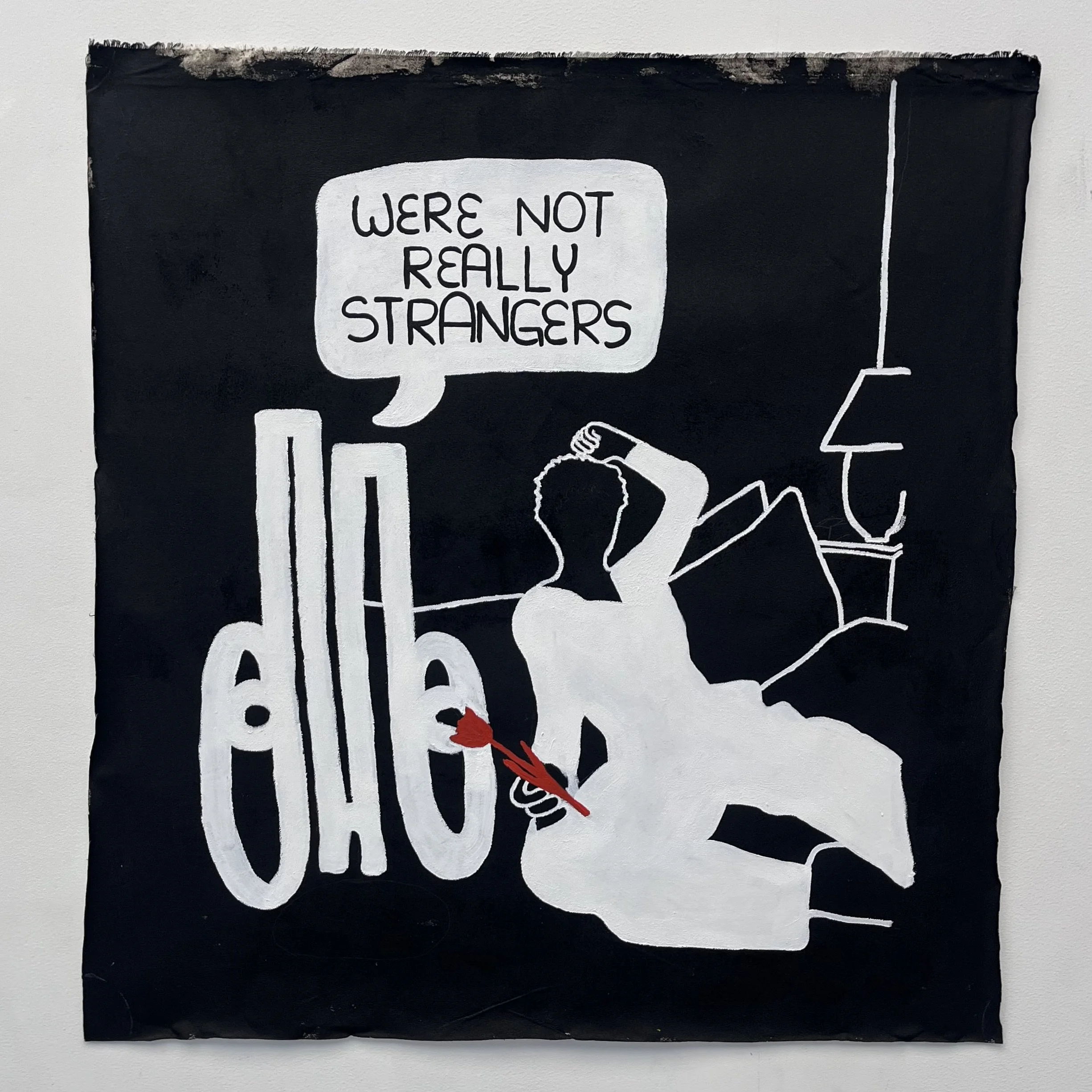
Acrylic on Unstretched Canvas
36.12 x 34.25 in (91.7 x 86.3 cm)
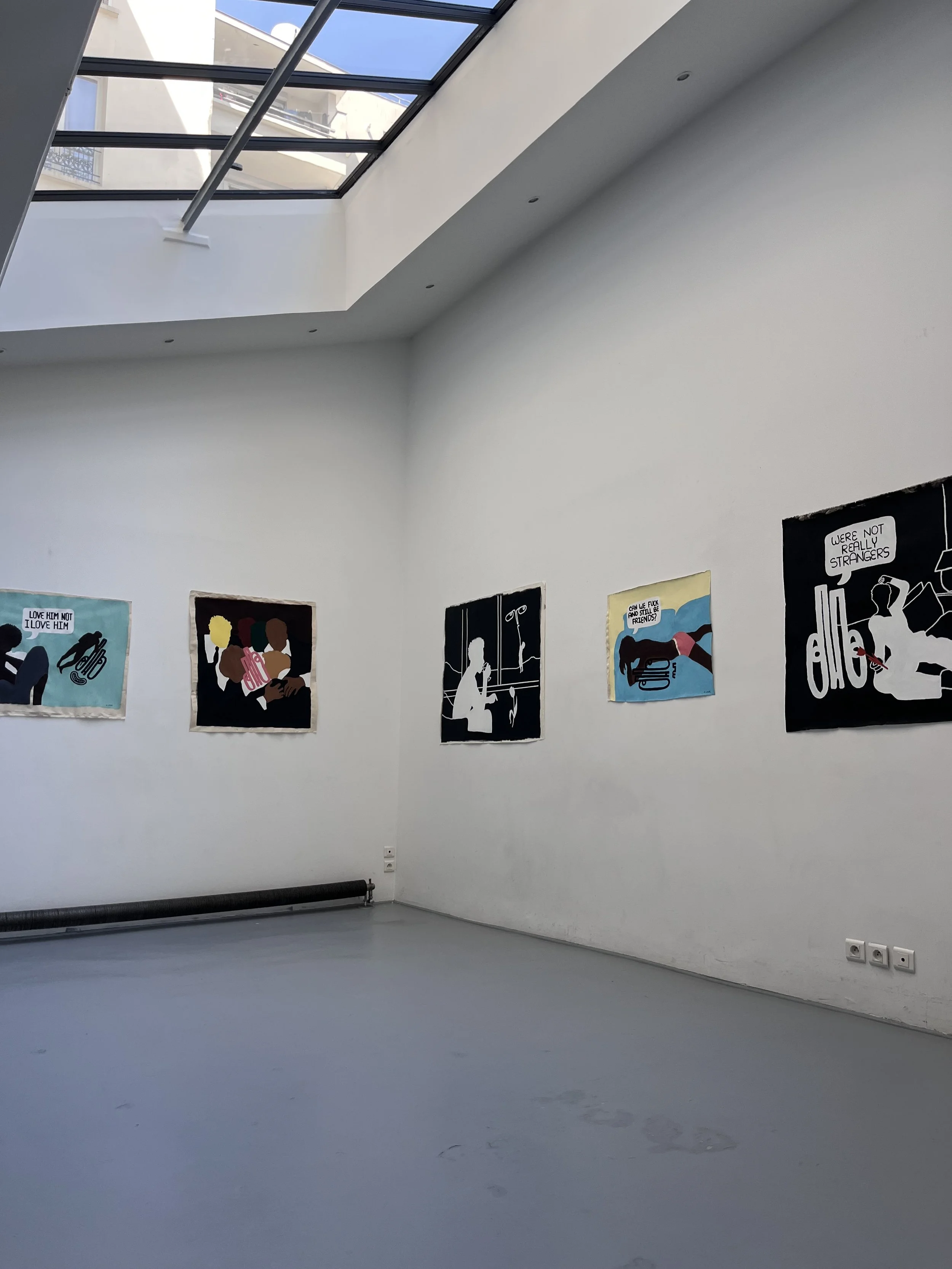
In We’re Not Really Strangers, one of the doodles sits beside the figure on a bed, holding an orange tulip. The doodle tells the figure, “we’re not really strangers.” In this work, I take on the role of the doodle after meeting a man through a dating app. The date goes so well that it feels as though we have known each other for years, even though we are technically strangers. The piece explores those rare moments when you meet someone for the first time yet feel an immediate familiarity, as if you have encountered them before, perhaps even in another life. The doodle’s statement becomes a reassurance that the two already know and understand each other on a deeper level. In return, the figure offers the doodle a tulip, a symbol of love and hope, affirming the sentiment: “yes, we aren’t really strangers.”
Artwork is signed on bottom right corner.
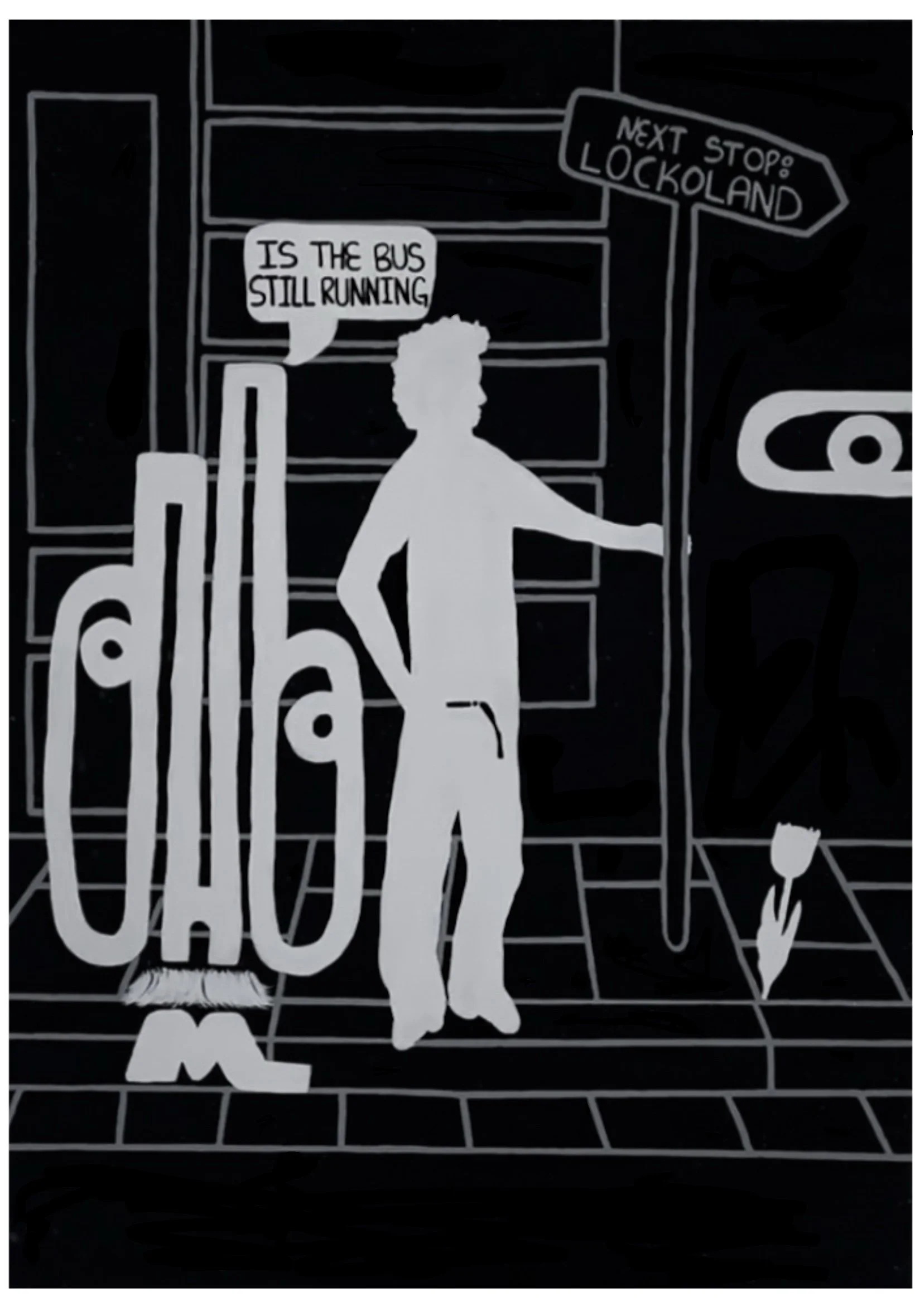
Acrylic on stretched canvas
74.5 x 54 in (189.23 x 137.16 cm)
Inspired by two of my dear friends, Bridget and Malaika, this painting grew from a running joke about whether “the bus was still running,” a playful reference to RuPaul. What began as something unserious slowly became a shared memory, one that now feels symbolic.
In the painting, I am waiting at a bus stop with two Lockadoodles on our way to Lockoland (my imagined world). One of them looks directly at me and asks, “Is the bus still running?” His gaze feels urgent, as if he is desperate to get home. The question lingers: are we trying to return somewhere, or are we waiting for something that has already passed?
To my right, a tulip grows through concrete. This references W. H. Auden’s poem Time Will Say Nothing but I Told You So, particularly the line, “Perhaps the tulips want to grow.” Despite the concrete, the tulip persists. It becomes a symbol of resilience and quiet insistence. It also connects to Bridget and I collecting tulips around Annapolis, a memory grounded in place and friendship.
From the running joke with Malaika to gathering tulips with Bridget, the painting explores the relationship between memory and the present moment. It asks whether one ever truly returns home after being away for a long time, and if we do, whether home remains the same.
Ultimately, this painting reflects on the power of friendship, the persistence of memory, the inevitability of change, and the ways we continue growing together, even while apart.
Artwork is signed on bottom right corner.
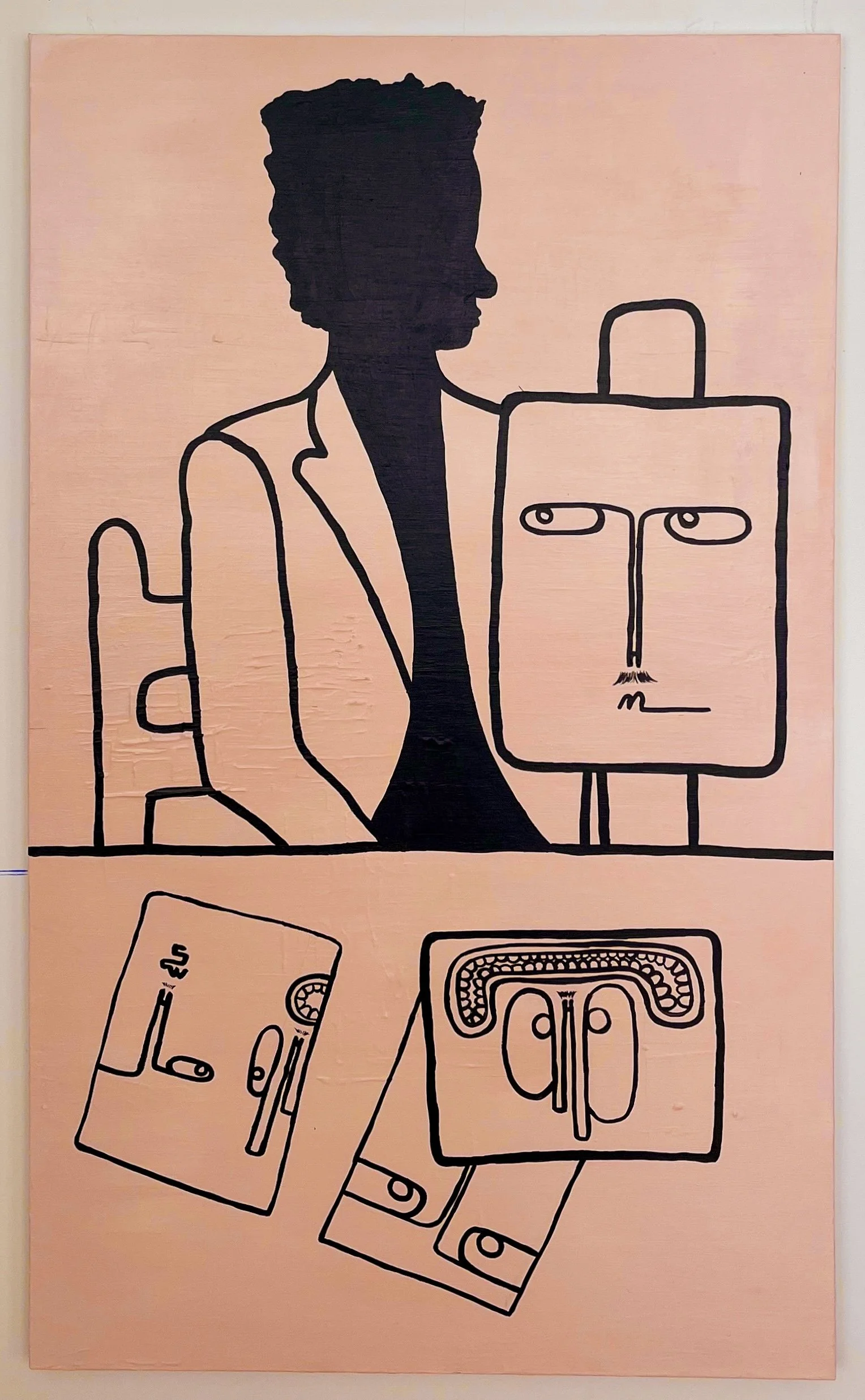
Acrylic on stretched canvas
90.44 x 152.5 cm (36 x 60 in)
In The Portrait of Judgement, the figure is the artist judging his paintings, contemplating primary questions about his pieces: “Are they good enough? Good enough for me or for viewers?” As is often the case with artists, I am my own biggest critic, always striving to impress myself. One thing that most don’t know about me is that I sometimes go into a world which I’ve dubbed “The Locko Supreme Court.” There reside many distinct versions of me, all sitting at a table and judging my work and my trajectory as an artist. This painting depicts a scene from that table, bringing the viewer into a world that has until now been hidden from everyone else. The figure’s head is tilted slightly away, indicating that he is not pleased. But the figure is me, so it is as though I am turning my back on my own work. Will the figure ever be pleased? Will he ever like what he creates?
Artwork is signed on bottom right corner.
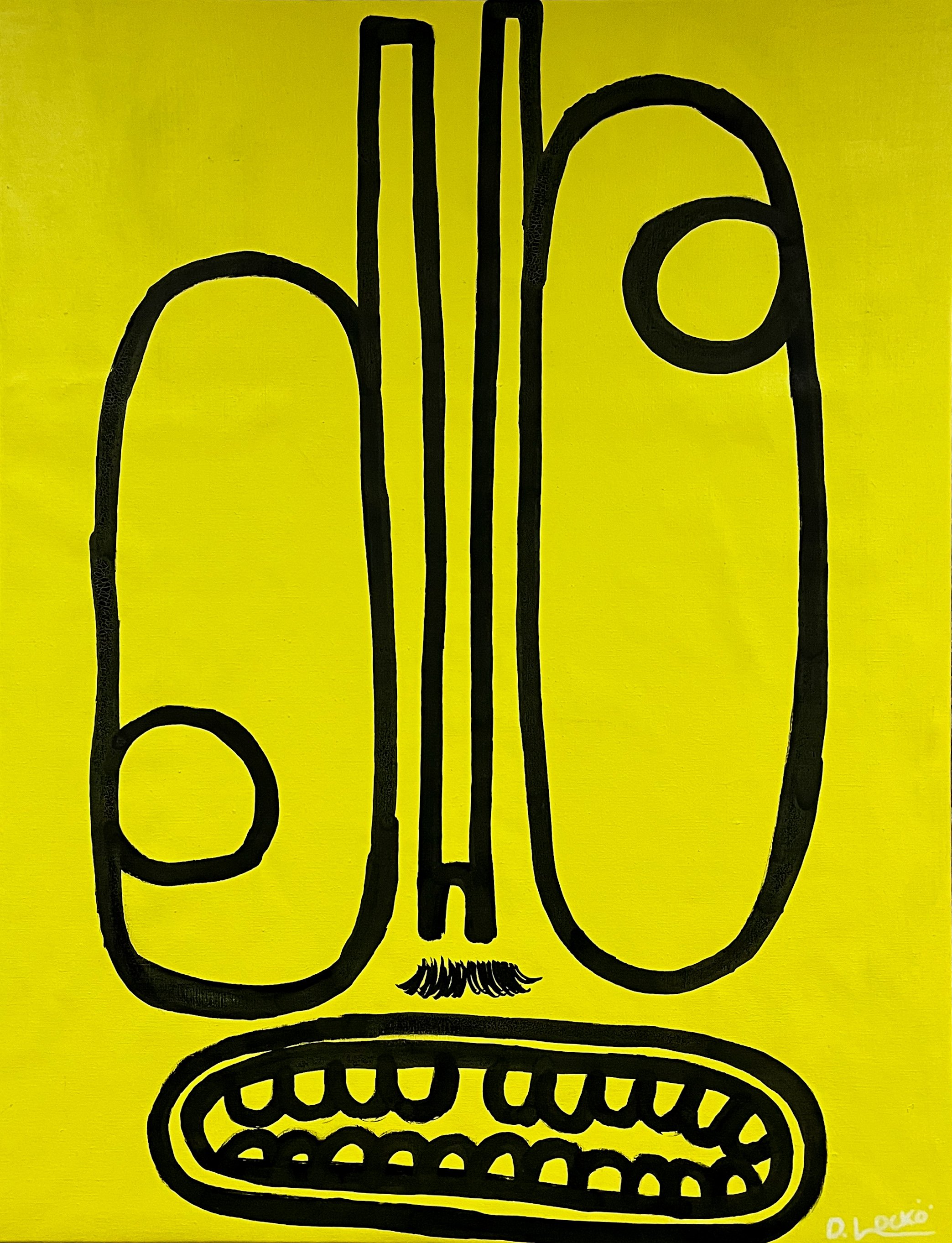
Acrylic on stretched canvas
71.12 x 92.71 cm (28 x 36.5 in)
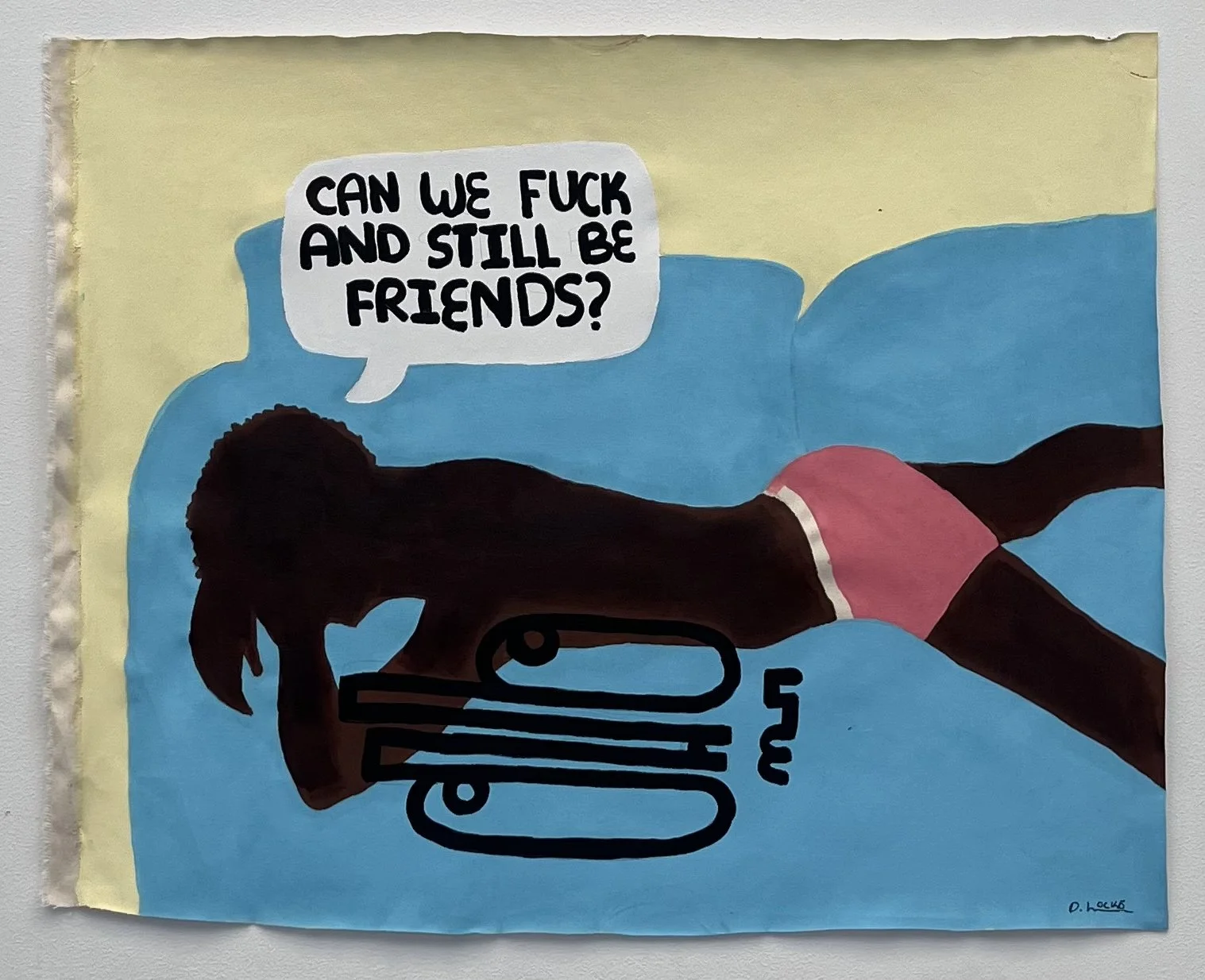
Inspired by the black caricatures of the 1920s and 30s, reclaim and repurpose harmful imagery to make them part of my own narrative–giving myself the power of how I, as a Black Queer man, am depicted.
This painting is part of a series: 09/14
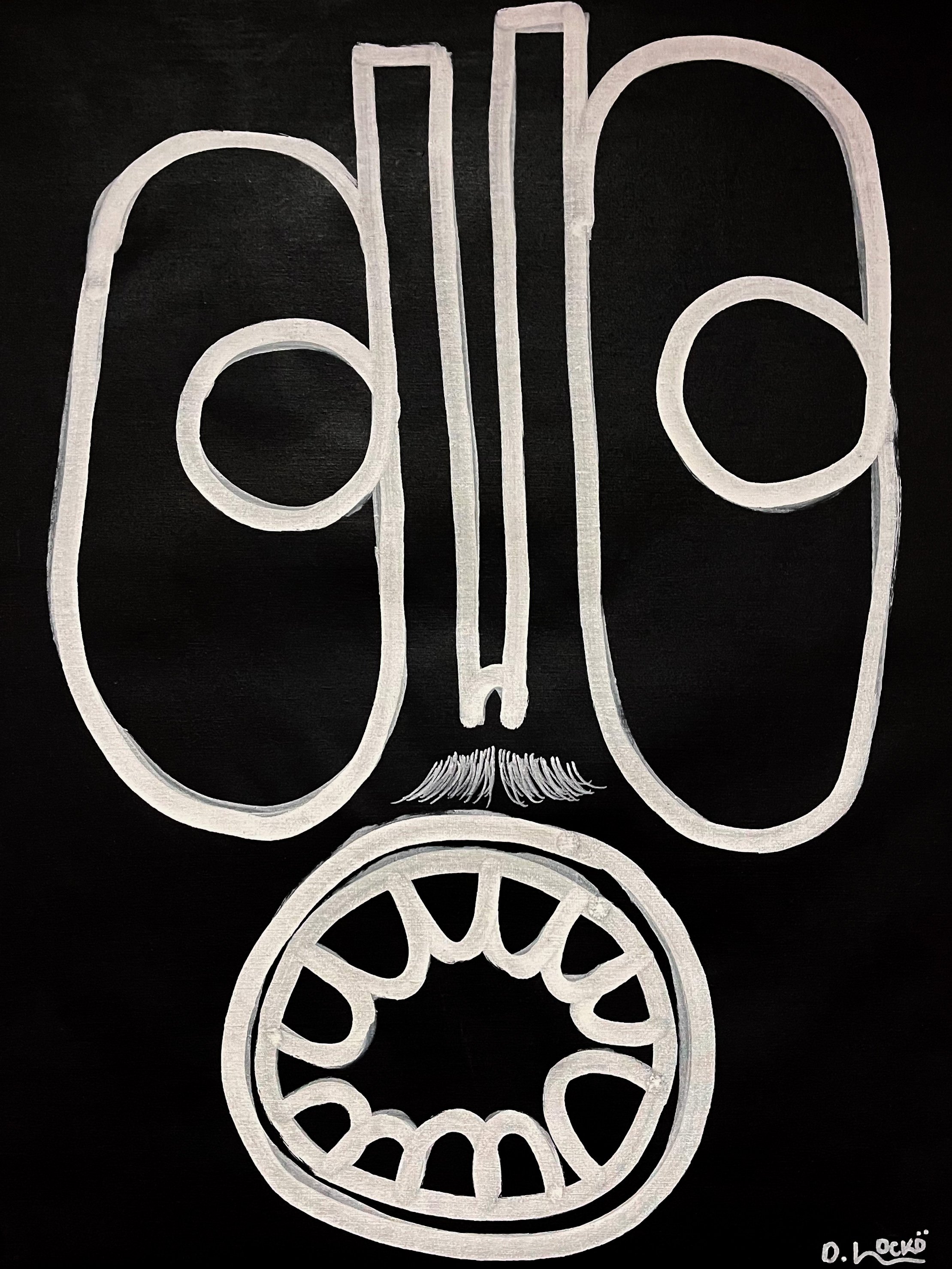
Acrylic on stretched canvas
71.12 x 92.71 cm (28 x 36.5 in)
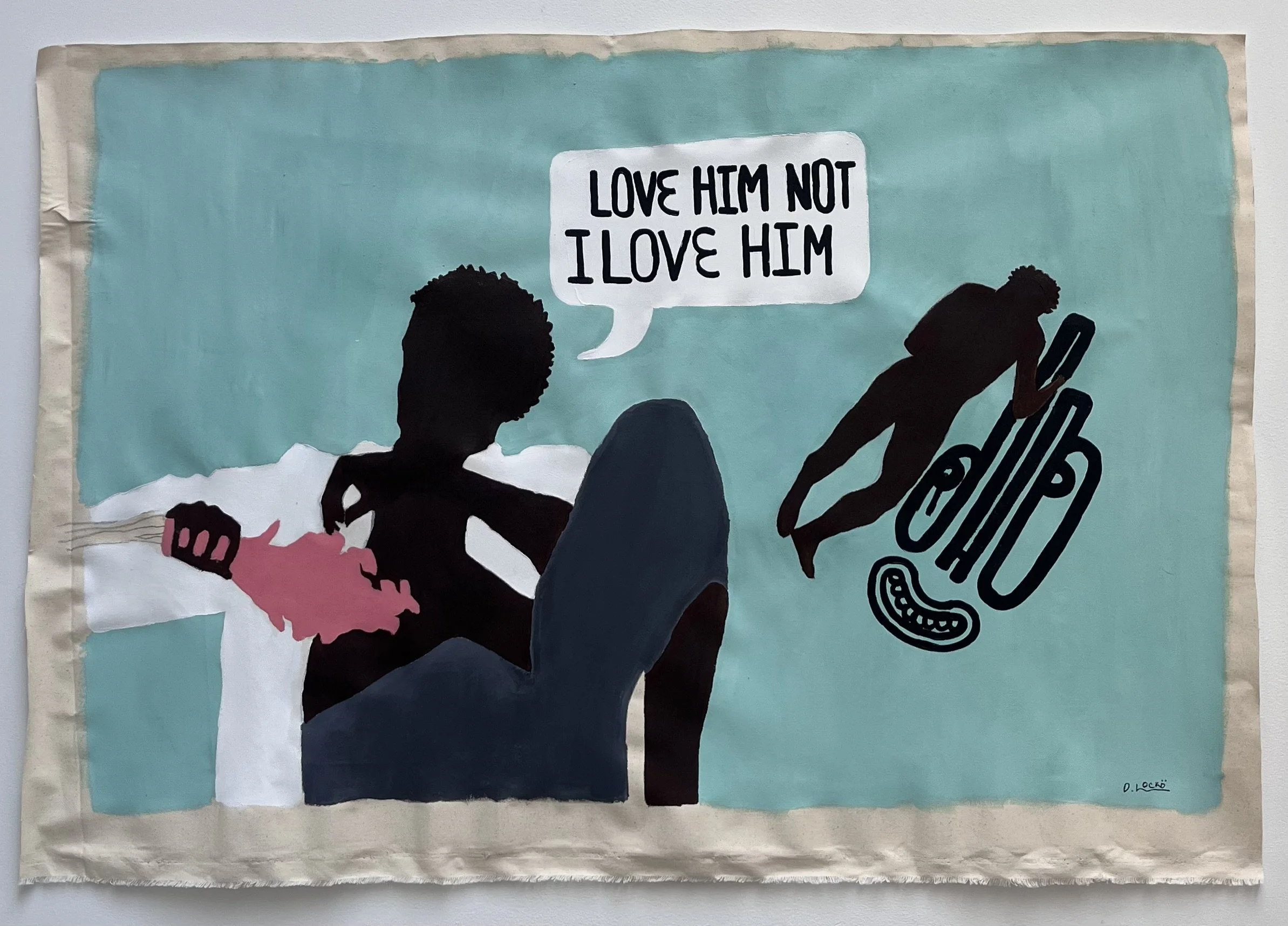
Inspired by the black caricatures of the 1920s and 30s, reclaim and repurpose harmful imagery to make them part of my own narrative–giving myself the power of how I, as a Black Queer man, am depicted.
This painting is part of a series: 10/14
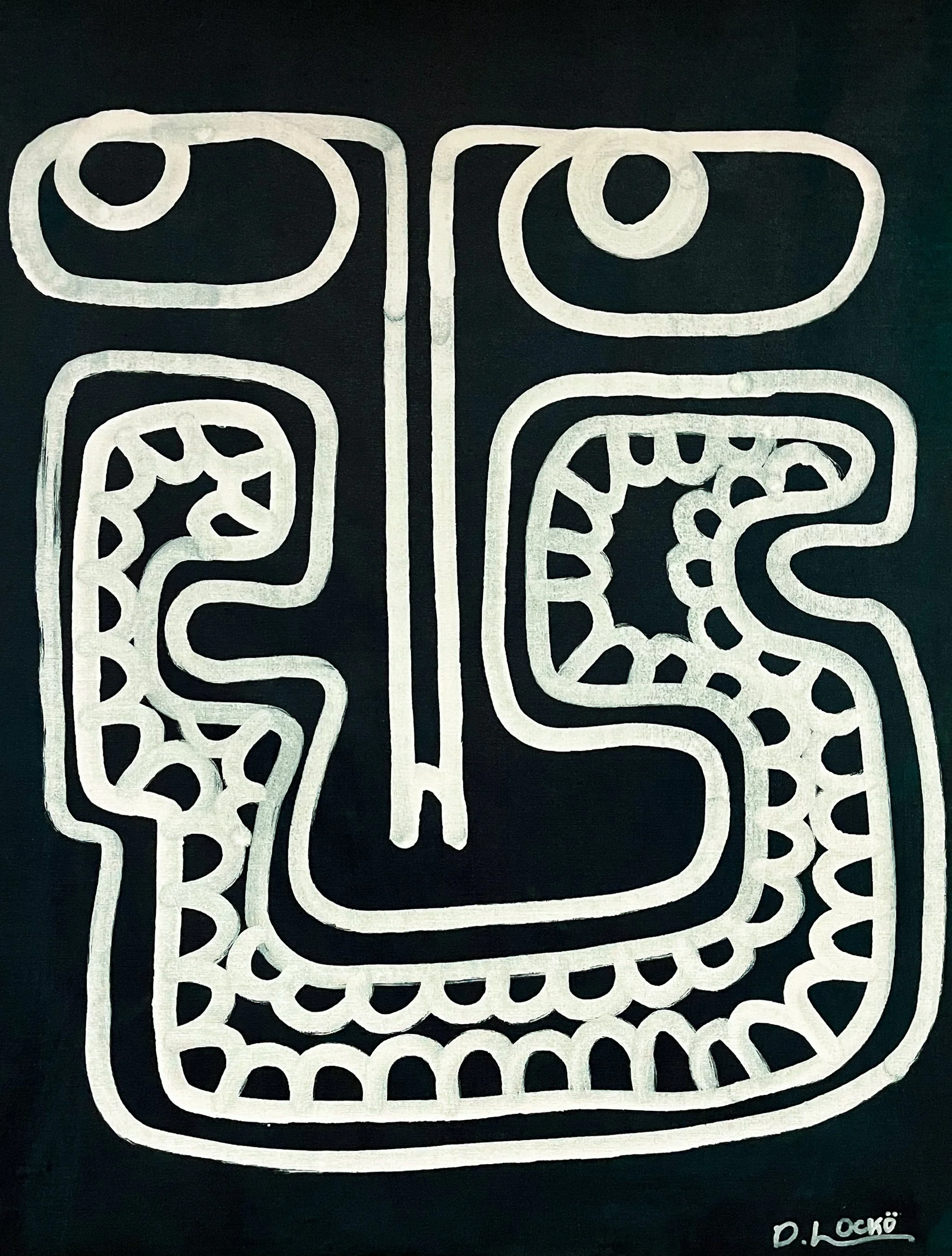
Acrylic on stretched canvas
71.12 x 92.71 cm (28 x 36.5 in)
Inspired by the black caricatures of the 1920s and 30s, reclaim and repurpose harmful imagery to make them part of my own narrative–giving myself the power of how I, as a Black Queer man, am depicted.
This painting is part of a series: 12/14
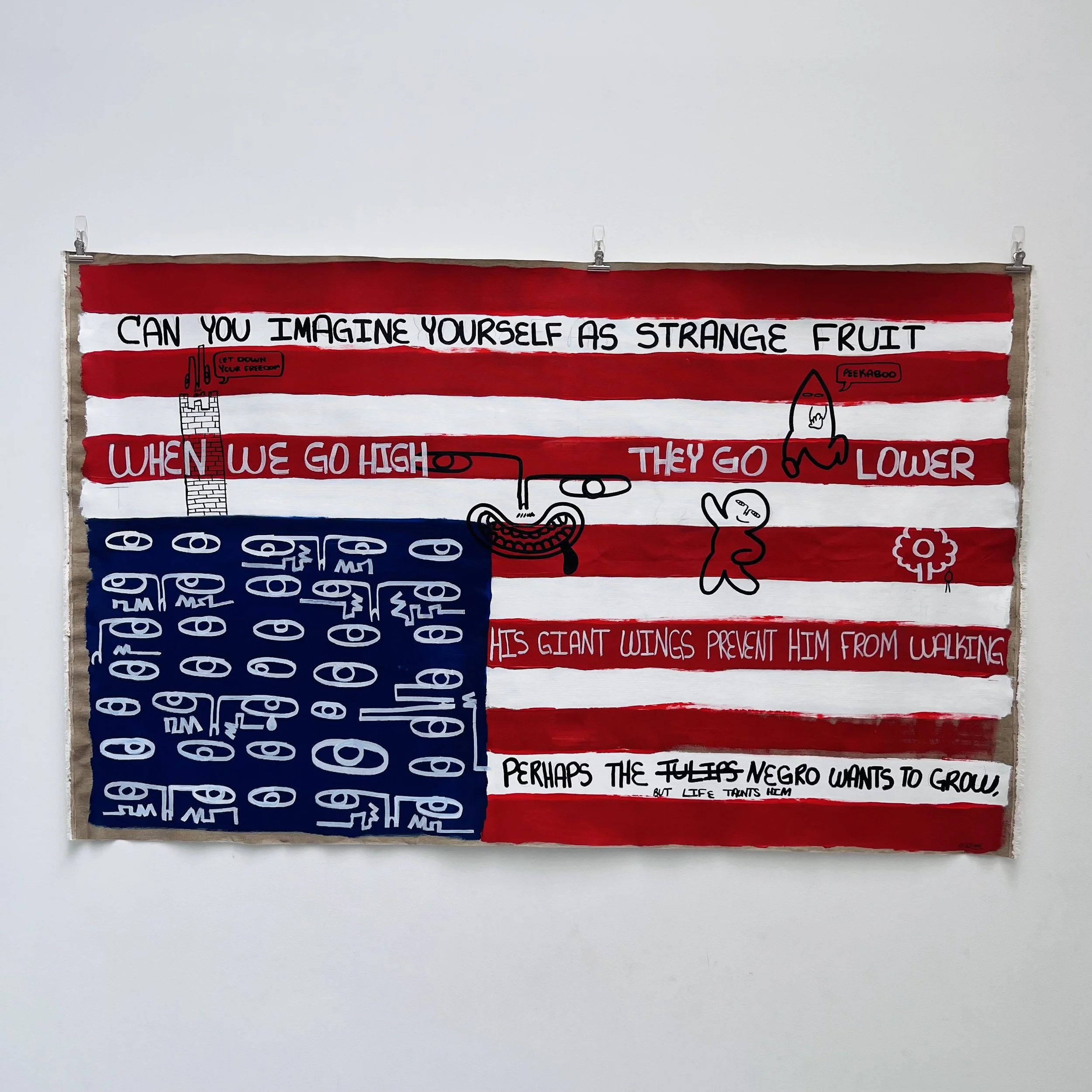
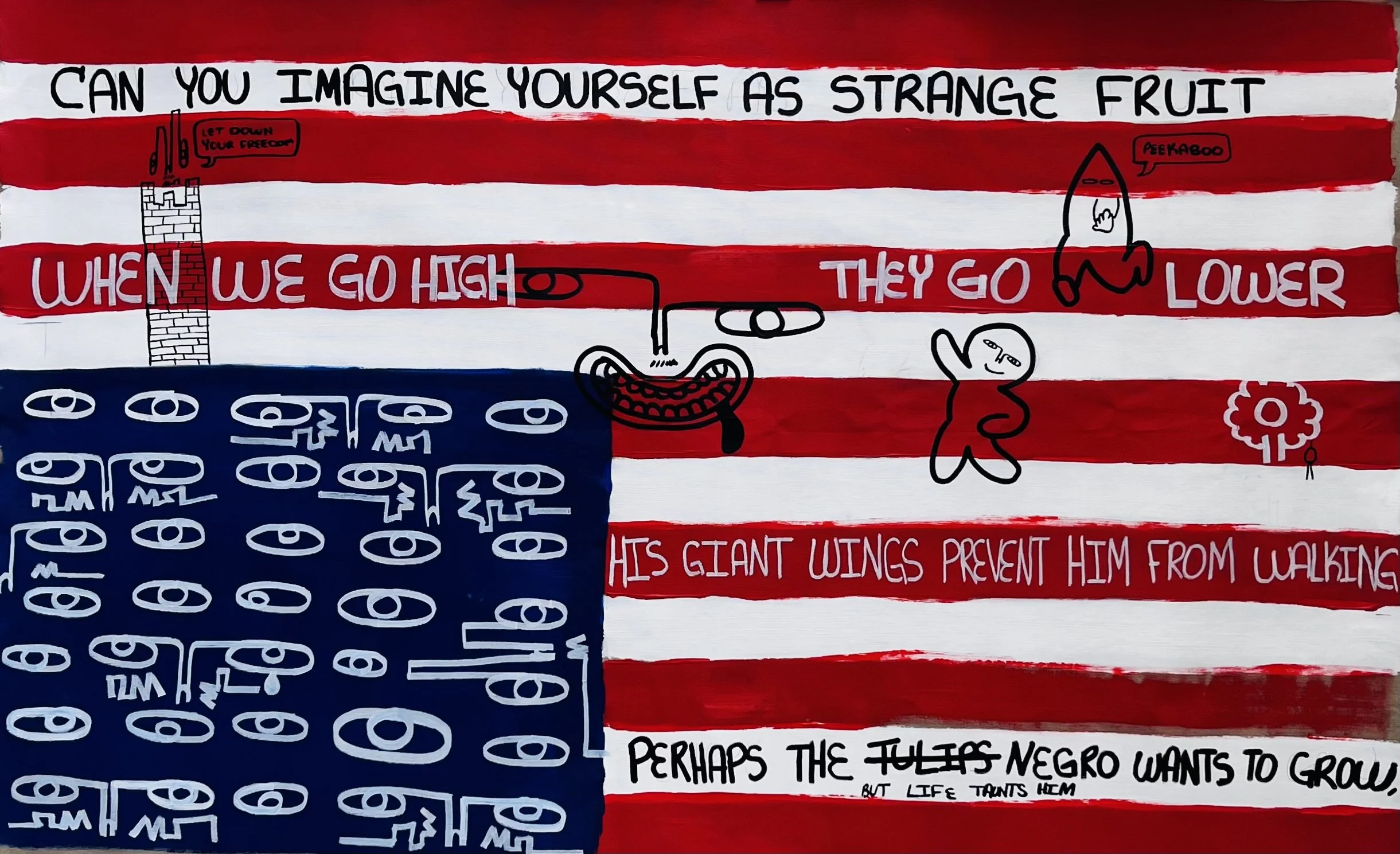
Acrylic on unstretched linen canvas
101 x 165.1 cm (40 x 65 in)
A Letter to America explores the upside down democracy of America—specifically in the consistent threat of oppression over freedom for Black Americans. The flag debuted in LOCKOLAND: Vienna, where I was told I could be arrested for displaying works with words like this on it.
Nevertheless, The United States of Locko: A Letter to America is part of LOCKOLAND: Paris, as I believe it is appropriate for Paris’ history as a gathering place for Black artistic expression. On the flag, I write “can you imagine yourself as strange fruit,” to encourage critical thinking across races. “Perhaps the negros want to grow” alludes to W.H. Auden’s “perhaps the tulips want to grow” from his poem If I Could Tell You. I used ‘negro’ instead of ‘tulip’ because, like the tulip, the negro cannot help what they are and where they live—they are in a garden, living day by day. It is here that I am trying to plant the idea in the observer that perhaps the Black American just wants to do exactly what it is that everyone else in America is doing. Maybe, just maybe, he wants to feel normal and not segregated or existing in the face of daily oppression.
No results match your search. Try removing a few filters.